
Career Growth
2026-06-17 - 8 min read
Fable 5 and Mythos 5: What These Powerful AI Models Can Do and Why Restricted Access
The AI industry was shaken when Anthropic suspended access to its newest and most advanced AI models, Fable 5 and Mythos 5, following a U.S. government export control directive. This article explains their capabilities, why they raised national security concerns, and what the restrictions mean for the future of frontier AI.
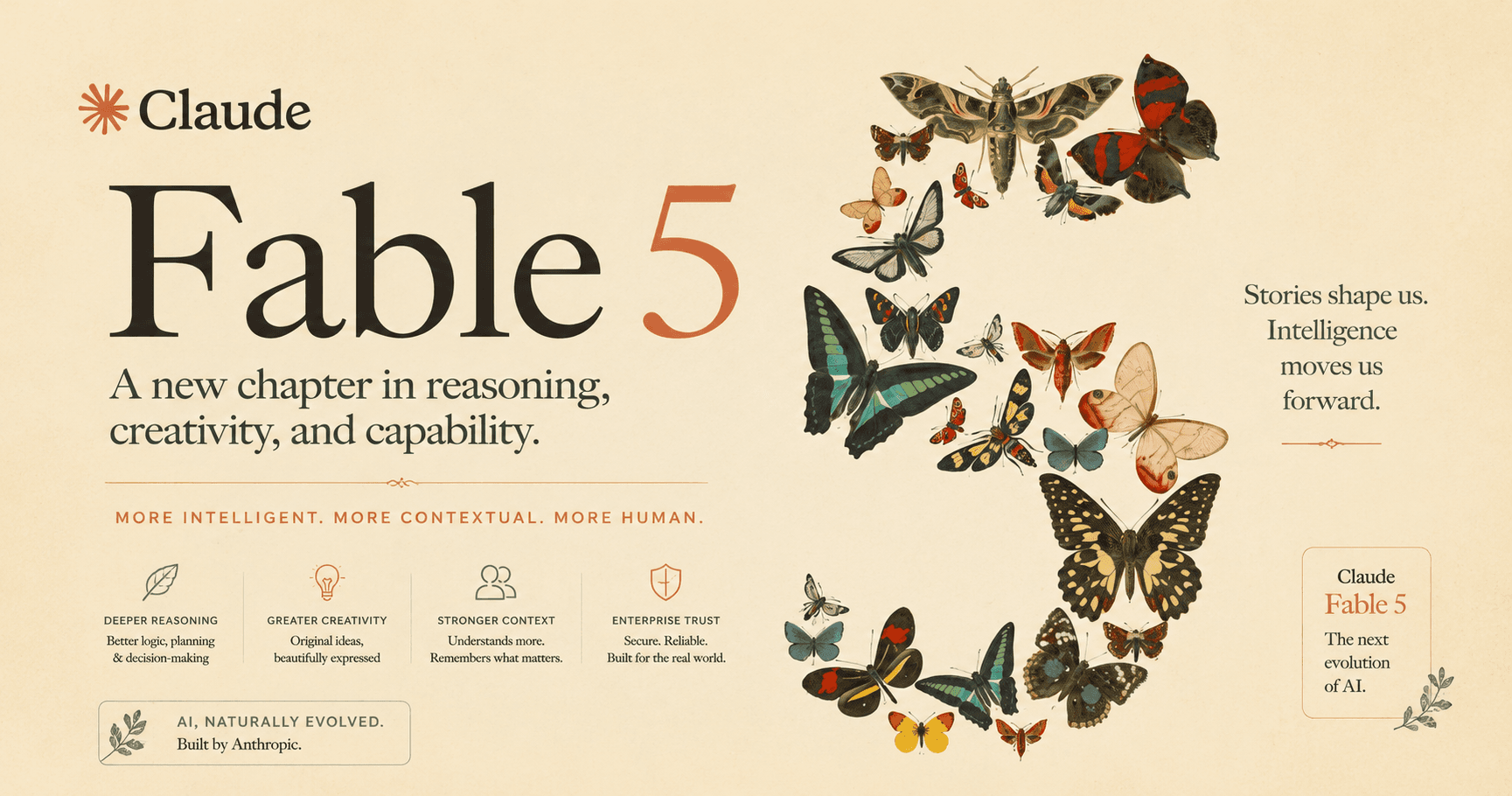
Fable 5 and Mythos 5: What These Powerful AI Models Can Do and Why the U.S. Restricted Access for Non-Citizens
The AI industry was shaken when Anthropic suddenly disabled access to its newest and most advanced AI models, Fable 5 and Mythos 5. Just days after launch, these cutting-edge systems became the center of a major national security debate in the United States.
Developers, businesses, and AI enthusiasts worldwide were left asking the same questions: What exactly are Fable 5 and Mythos 5? Why were they considered so powerful? Why did the U.S. government restrict access for non-U.S. citizens? And what does this mean for the future of AI?
What Is Fable 5?
Fable 5 is described as Anthropic's most advanced public AI model for coding, reasoning, research, and autonomous task execution. Instead of acting like a basic chatbot, it behaves more like a highly capable digital coworker that can assist with technical and strategic work.
Core capabilities - Writing production-grade code - Debugging complex software issues - Refactoring large codebases - Generating technical documentation - Performing code reviews - Supporting research and business analysis
Fable 5 stands out because it is built for higher-value tasks that usually require deep understanding, planning, and strong problem-solving ability.
What Is Mythos 5?
Mythos 5 is the more powerful foundation model behind Fable 5. It reportedly offers stronger reasoning, deeper research support, better long-context understanding, and more advanced problem-solving across technical and analytical tasks.
What makes it important - Superior reasoning performance - Strong coding capability - Advanced research handling - Long-context comprehension - Better performance on difficult, multi-step tasks
This positions Mythos 5 as a frontier model that could influence software development, cybersecurity, business planning, and scientific workflows.
Why Did the U.S. Government Restrict Access?
The restriction was reportedly tied to export-control and national security concerns. Authorities were said to be worried about jailbreak risks and the possibility that powerful AI systems could help expose software vulnerabilities, generate exploit paths, or support offensive cyber activity.
The concern was not only about what the model could answer in a chat. It was about what a highly capable reasoning and coding system could do when combined with persistence, automation, and expert prompting.
What Is an AI Jailbreak?
An AI jailbreak is a method of bypassing built-in safety restrictions. If successful, it may allow a model to produce content or guidance that it would normally block.
Potential risks - Discovering software vulnerabilities - Generating exploit strategies - Supporting cyber operations - Assisting intelligence gathering - Accelerating misuse by less sophisticated actors
This is why frontier models are now being discussed not only as productivity tools, but also as technologies with national security implications.
Why Were Non-U.S. Citizens Targeted?
Under export-control frameworks, advanced AI can be treated similarly to other sensitive technologies such as semiconductors, military systems, encryption technologies, and aerospace innovations.
From that perspective, restricting access for foreign nationals is part of a broader effort to control the spread of technologies that may have strategic or dual-use value.
Why Were the Models Disabled More Broadly?
One practical problem is identity verification. Enforcing citizenship-based access rules globally is difficult, especially for online services. Because of that, disabling access more broadly can become the simplest compliance strategy, even if it is disruptive for legitimate users.
Industry Reaction
Supporters argue that these steps are necessary because frontier AI is becoming too powerful to treat casually.
Supporters say the restrictions: - improve national security - reduce cyber misuse risk - protect sensitive technological advantages
Critics argue that broad restrictions can slow innovation and create uneven access to the most important tools shaping the future.
Critics say the restrictions: - may slow global innovation - are difficult to enforce consistently - could create a risky regulatory precedent
What Happens Next?
This moment may shape how advanced AI is governed in the future. We may see stronger safety evaluations, identity verification systems, export licensing models, and controlled re-release strategies for frontier AI systems.
Final Thoughts
Fable 5 and Mythos 5 represent a major leap in AI capability, but they also highlight the growing tension between innovation and national security. Their restriction may become a defining example of how governments and AI companies handle powerful models in the years ahead.
For users, builders, and businesses, the lesson is clear: the future of AI will not be shaped by capability alone. It will also be shaped by policy, trust, and control.